
· Maya Ellison
Acupressure Mat for Lower Back Pain: How to Position Yourself
If your lower back is what hurts, most acupressure mat instructions are written for someone else. The default advice puts the mat under your shoulders and upper back, which suits tension between the shoulder blades and does little lower down. This guide is only about position: where the mat goes, what your knees do, how long to stay there. Progression, beginner mistakes, and the seated and standing variants are already covered in our how to use an acupressure mat guide. And one thing upfront: this is a relaxation routine, so if you want to know what is causing your pain, that conversation belongs with your doctor.
Where should the mat sit if the pain is in your lower back?
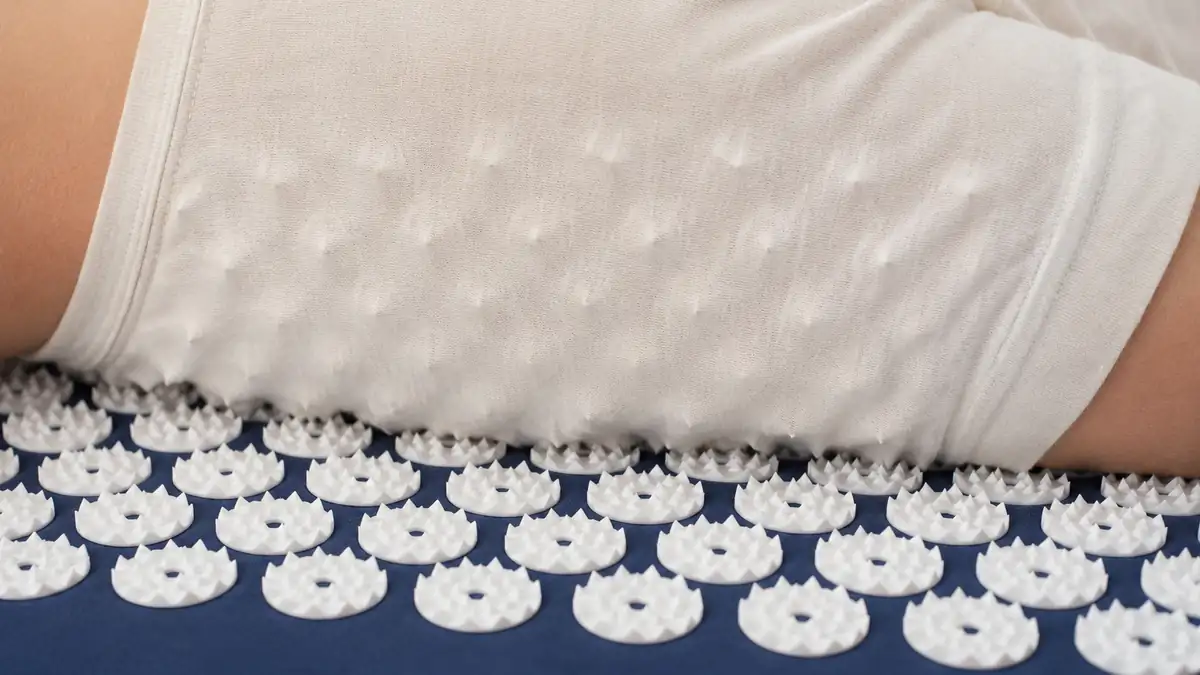
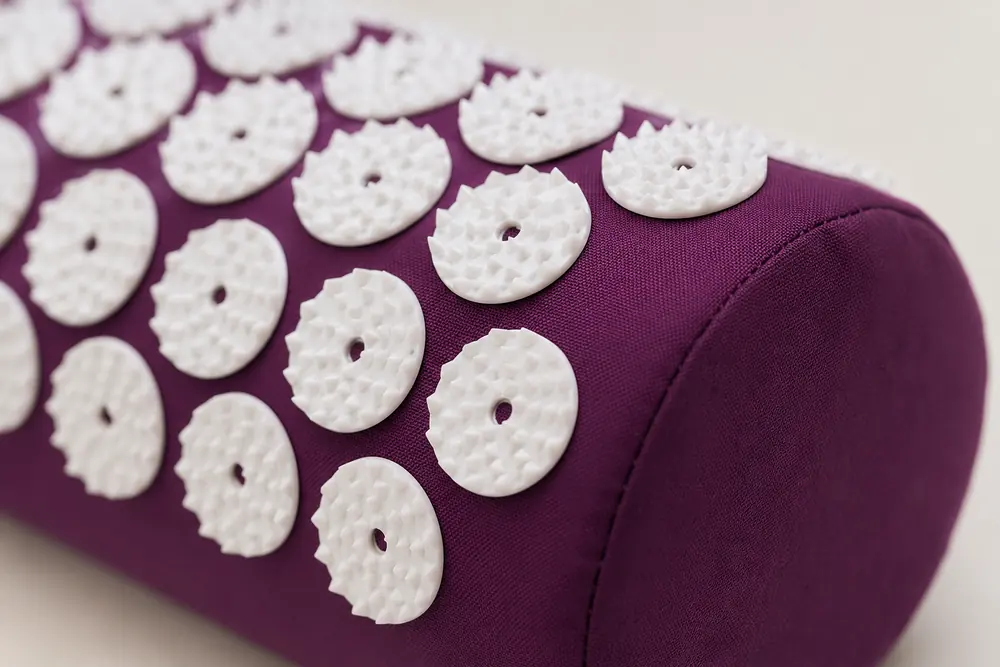
The SpikeRest mat is a compact format, and buyers put it exactly where they want the pressure. One verified buyer in Bulgaria wrote: "The pad is small, around 60cm in length, but still works well." That is the advantage: you aim it at one zone and every point lands where you need it. Before you settle, feel for the mat's bottom hem: it belongs at or just below the top of your pelvis, not under your ribs.
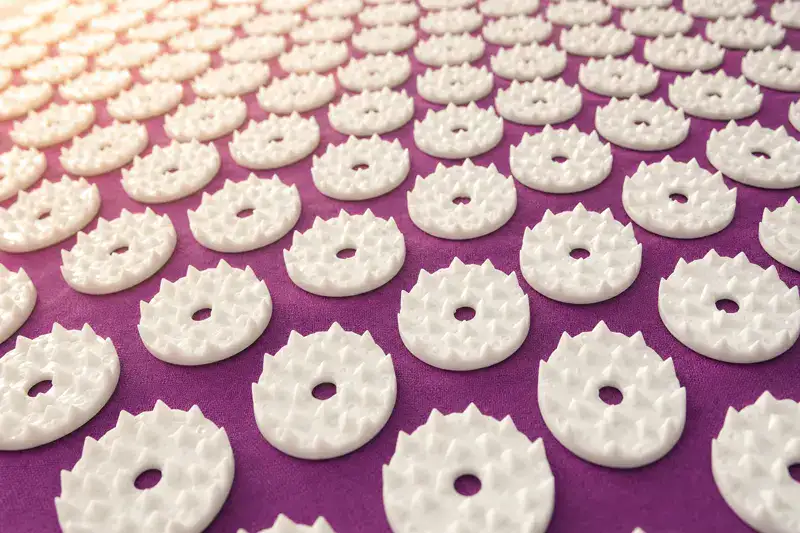
SpikeRest mat surface, a compact format that covers one zone at a time rather than the whole back
— SpikeRest product specs, 2026
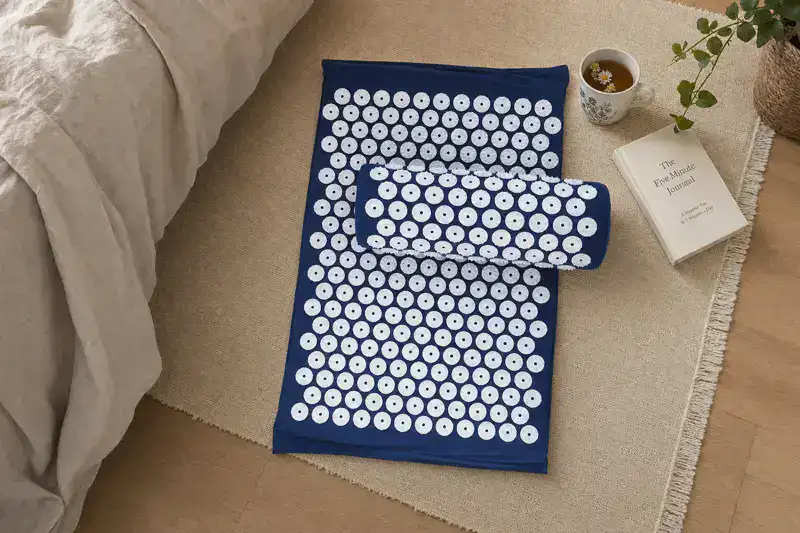
How to lie down without arching your lower back
- Set the mat on a firm, flat surface. A soft mattress lets it bunch under your weight, and contact goes uneven.
- Sit in front of it, then roll back onto your forearms. Lowering gradually lets you feel where the edge is.
- Bend your knees before your back touches down. Feet flat, hip width apart. This is what lets the pelvis rotate.
- Let the lower back settle first, then release the shoulders and neck. Most people forget the second half.
If the floor is not realistic, a firm mattress works, and the chair back version in our how to use guide is a lower intensity fallback.
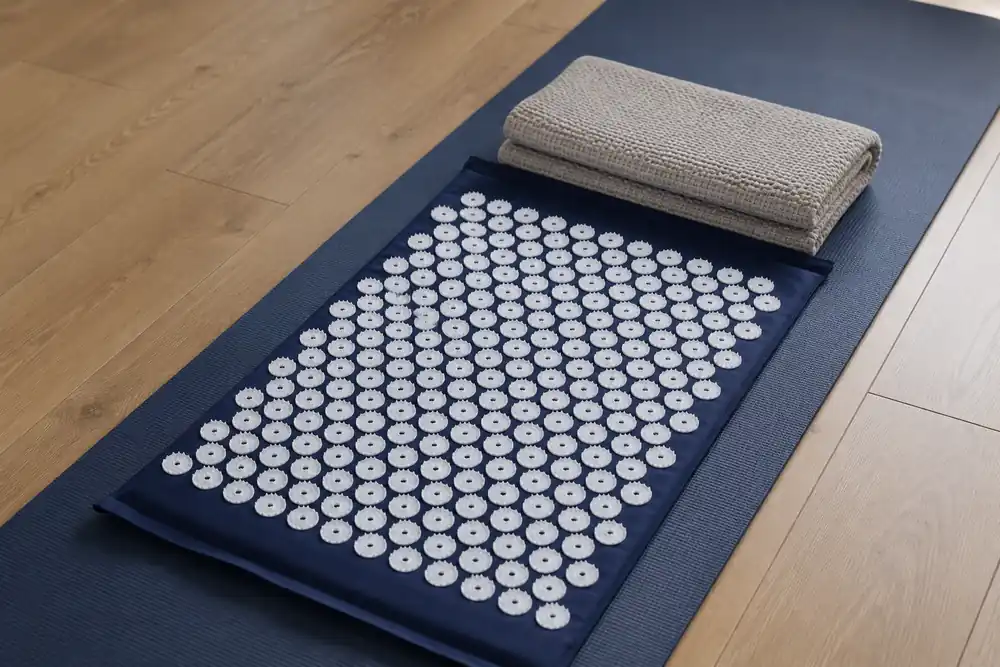
What to put under your knees, and why it matters
- The bolster pillow under the knees. At 14.6 x 5.9 x 3.9 in (37 x 15 x 10 cm) it is about the right height for most people, spike side down if you want the legs out of it.
- A rolled bath towel or a sofa cushion. Free, and easy to adjust one fold at a time.
- A chair seat, with your calves on it. The highest support of the three, useful if bent knees still leave a gap.
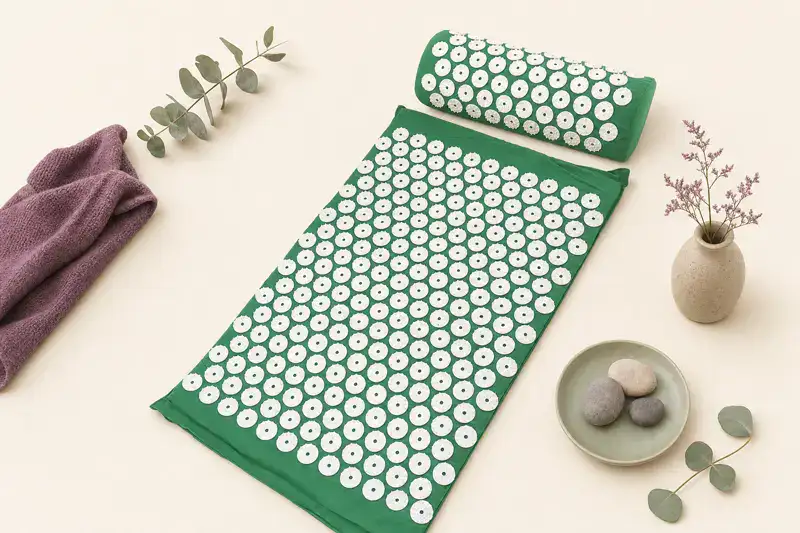
Bolster under the knees, the lower back, or the neck?
| Bolster placement | What it changes | Worth trying if |
|---|---|---|
| Under the knees | Flattens the lumbar curve, spreads contact | You are starting out, or the middle never seems to touch |
| Under the lower back | Concentrates the points on a narrow band | You know how the mat feels and want more intensity |
| Under the neck | Supports the head so the neck does not crane | Your neck tenses up when you lie flat |
How long to hold the position
Set a timer, because time on a spike mat is hard to estimate from the inside. The first minute is the sharp part, and our first session guide covers that arc. What is specific to this position is getting up: roll onto your side, push up with your arm, let the legs follow.
Two randomized pilot studies of a needle stimulation pad in chronic neck and lower back discomfort reported lower pain intensity after two weeks, and the authors called for larger trials
— Hohmann et al., Evidence-Based Complementary and Alternative Medicine, 2012
An acupressure mat added to supervised exercise for chronic low back discomfort: both groups improved over six months, so the mat's separate effect is unclear
— Applied Sciences (MDPI), randomized controlled study, 2021
Why we place the bottom hem first. Nearly every mat instruction online starts from the shoulders down. That works when you are treating the upper back. For the lumbar curve it puts the points too high, which is the single reason most people feel nothing where they wanted it. So here we reversed the reference point: hem at the pelvis, and the top lands where it lands. See how we test.
Signs you should see a doctor instead of reaching for a mat
Get medical advice if your back pain comes with any of the following:
- Pain that radiates down one leg, especially past the knee, or pins and needles along the same path.
- Loss of strength in a leg or foot, or a foot that drags on stairs.
- Any change in bladder or bowel control, or numbness around the saddle area. Urgent, not wait and see.
- Pain that started after a fall or a crash rather than gradually.
- Fever, unexplained weight loss, or night pain that does not settle when you move.
None of that means a mat caused the problem. It means your question is a medical one.
Who should not use a spike mat on their back
- Bleeding disorders, blood thinners, or other anticoagulants. Point pressure bruises more easily than flat pressure.
- Fragile, broken, infected, or irritated skin where the mat would touch. Wait until it heals.
- Reduced skin sensation, for example diabetes with peripheral neuropathy. If you cannot feel pressure, you cannot judge it.
- Pregnancy. Talk to your doctor or midwife first.
- Heart conditions or a pacemaker. Ask before you start.
Wellness disclaimer: SpikeRest mats are wellness products, not medical devices. They are not intended to diagnose, treat, cure, or prevent any condition, including back pain. If you have a medical condition, are pregnant, or take blood thinners, talk to your doctor before use.
Lower back positioning FAQ
Where exactly do I put the mat for lower back pain?
Line the bottom edge up with the top of your pelvis, roughly at your waistband, so the points sit across the lumbar curve rather than your shoulder blades. At 26 x 15.7 in (66 x 40 cm) the mat covers one zone at a time, not the whole back.
Should my knees be bent or straight?
Bent and supported, for most people. Legs flat tend to tilt the pelvis forward and leave a hollow under the lumbar spine, so fewer points actually touch. Calves resting on a bolster, a rolled towel, or a chair seat lets the lower back settle down.
Can the bolster go under my lower back instead of my neck?
It can, and some people prefer it, but it is more intense rather than better: the points concentrate on a small area. Try the knees version first, and move the bolster only once you know how your back responds to the mat at all.
Is an acupressure mat a treatment for back pain?
No. SpikeRest mats are wellness products, not medical devices, and are not intended to diagnose, treat, cure, or prevent any condition. Research on spiked mats and back discomfort is limited to small pilot studies whose own authors call for larger trials.
For what the research does and does not show, our acupressure mat benefits page goes through each study with its limits. For an evening habit, see acupressure mat before bed. Still choosing a mat? Our best acupressure mat comparison is candid about where a compact mat loses. The SpikeRest mat and set starts at $34.95, free shipping in 6 to 10 business days.

Maya Ellison · Wellness Product Tester & Curator, SpikeRest
Maya tests every mat on her own evening routines, timed sessions, one color at a time. She reworked the placement guidance here around the mat's actual 66 cm length.
Reviewed and updated July 27, 2026. See how we test and our story. Read more on the SpikeRest blog.