
· Maya Ellison
Your First Acupressure Mat Session: What to Actually Expect
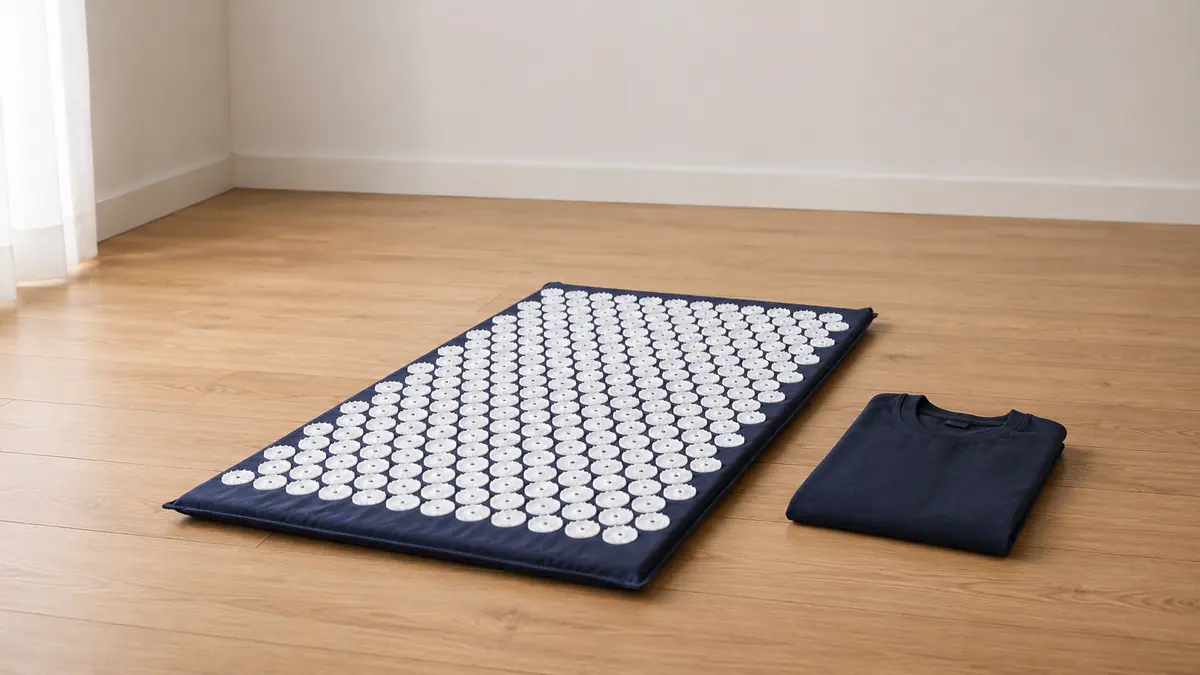
Nobody's first acupressure mat session goes the way they picture it. Some people expect it to hurt the whole time and are surprised when it does not; others expect nothing and are caught off guard by how intense the first minute feels. Both reactions are normal. This guide walks through the sensation minute by minute, honestly, so you know what to expect before you lie down — no exaggeration in either direction. If you want the step-by-step setup first, see how to use an acupressure mat.
Minute by minute: what the sensation actually feels like
Here is the progression most first-timers describe, broken down by roughly how long it takes:
- 0-30 seconds: the sharp phase. Lying back onto the points for the first time, most people feel an intense, almost startling pressure — not quite pain, but close to it. This is the moment people either tense up (which makes it feel more intense) or consciously relax into it.
- 30 seconds-2 minutes: the transition. The sharpness typically starts to blur into a prickly, buzzing warmth. Some describe it as the skin "waking up." This is usually the hardest part to push through mentally, even though the physical intensity is already easing.
- 2-5 minutes: settling into warmth. Most people report the sensation shifting to an even, warm, slightly tingling feeling across the whole contact area. Breathing tends to slow down naturally here, and this is where people start to describe feeling "relaxed" rather than "enduring it."
- 5+ minutes: steady and calm. For those who stay longer, the feeling generally plateaus into a mild, warm background sensation, and attention often drifts elsewhere — to breathing, to a book, or to simply resting.
Not everyone follows this exact timeline — skin sensitivity, whether you are wearing a shirt, and how tense you are all shift the pace. But the overall shape (sharp, then transitional, then warm) is what the large majority of first-time users describe.
An exploratory 2011 study on a spiked acupressure mat found participants reported feeling more relaxed during a session, with a measurable shift in heart-rate variability, consistent with the sharp-to-warm pattern many first-timers describe
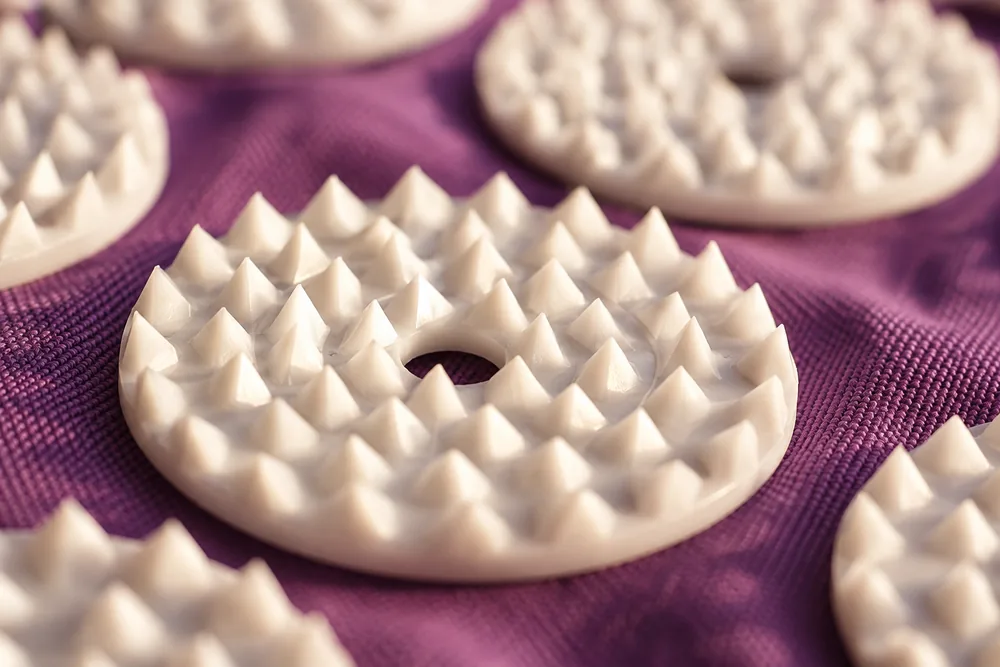
How long to stay on for your first session
We suggest treating your very first attempt as a 2-minute test: lie down, breathe slowly, and see how the sharp-to-warm transition feels for you specifically. If that goes fine, most people are comfortable extending to 5-10 minutes within the same session or the next one. Longer sessions of 15-20 minutes are common once someone is a few sessions in, but there is no rule requiring you to get there quickly.
| Session | Typical duration | What to expect |
|---|---|---|
| First attempt | 2 minutes | Sharp phase, easing toward warmth |
| Next few sessions | 5-10 minutes | Faster transition to warmth, more comfortable |
| After 1-2 weeks | 15-20 minutes | Steady, calm background sensation |
What we measured on session one. As part of our how we test process, our curator Maya Ellison timed her own first-session reactions across all four SpikeRest mat colors, through a shirt each time. The sharp phase consistently lasted 20-40 seconds before easing, and by the two-minute mark she rated the sensation as "comfortable" in every trial. We use that timing, rather than a generic estimate, to set the expectations on this page.
Through a shirt or bare skin for the first time?
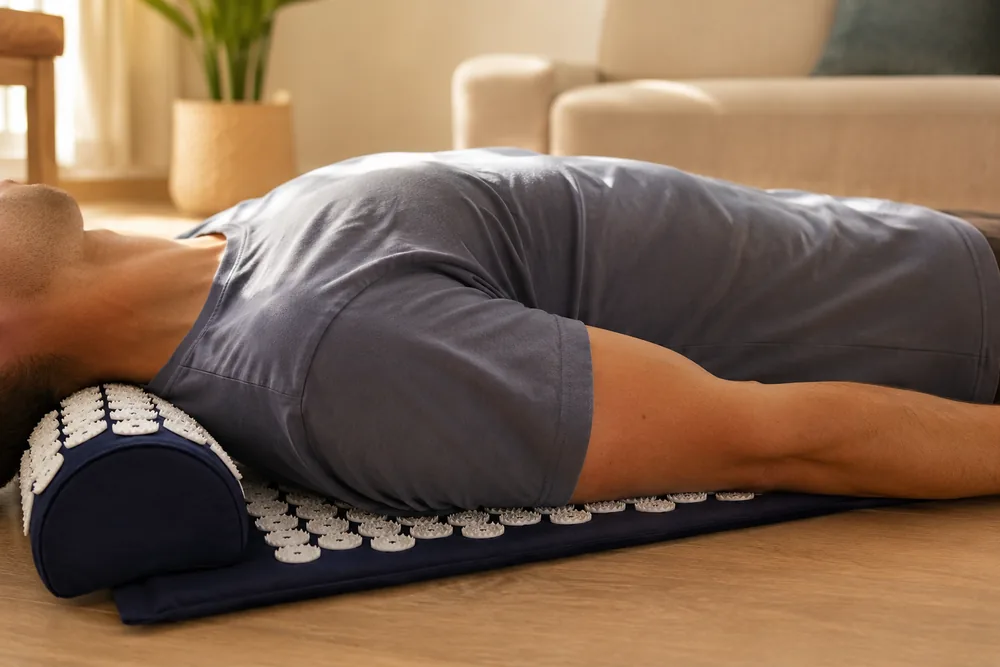
If you are nervous about the first session, start with a thin T-shirt between your skin and the mat. It takes the edge off the sharp phase considerably while still letting you feel the warm, tingling settling-in. Once you have a session or two under your belt and know the pattern, bare skin gives a more direct version of the same sensation. Neither is "correct" — it is entirely about matching the intensity to what you are ready for.
When to stop
There is a real difference between "this is intense" and "this hurts in a way that feels wrong," and most people can tell the two apart once they know to look for it. Signs it is time to stop a session: sharp, localized pain rather than an even pressure across the mat, numbness or tingling that does not fade, or visible redness or irritation on the skin afterward that goes beyond a normal pink flush. None of these are supposed to happen, and stopping is always the right call over pushing through.
Who should check with a doctor before trying it
An acupressure mat concentrates pressure into many small points, and that changes the risk calculation for some people. If any of the following apply to you, talk to your doctor before your first session rather than after:
- Pregnancy.
- Blood thinners or a bleeding disorder — bruising can happen more easily.
- Broken, infected, sunburned, or irritated skin — wait until it heals.
- Reduced skin sensation, for example from diabetes or peripheral neuropathy — you may not feel if pressure is too intense.
- Heart conditions or a pacemaker.
Wellness disclaimer: SpikeRest mats are wellness products, not medical devices. They are not intended to diagnose, treat, cure, or prevent any condition. If you have a medical condition, are pregnant, or take blood thinners, talk to your doctor before use.
After your first session
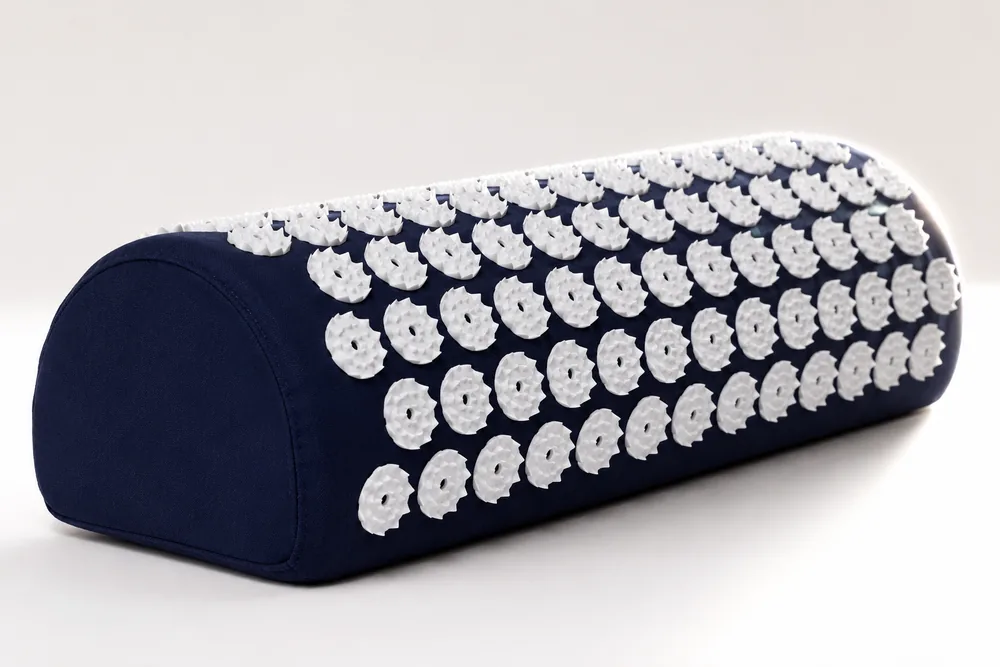
Once your first session is done, a light pink imprint of the points on your skin is common and typically fades quickly — that is pressure, not injury. If the experience felt manageable and even pleasant by the end, our acupressure mat before bed guide shows how people turn a single session into an evening habit, and our acupressure mat benefits page covers what the research says about repeated use. If you are also curious about using the mat on your feet, see our foot acupressure mat guide.
If you have not picked a mat yet, our best acupressure mat guide walks through the four things that actually decide it: point density, size, what comes in the box, and price.

Maya Ellison · Wellness Product Tester & Curator, SpikeRest
Maya tests every mat on her own evening routines — timed sessions, one color at a time — and turns down more references than she approves. She timed her own first-session reactions across all four colors to write this guide.
Reviewed and updated July 4, 2026. See how we test and our story. Read more on the SpikeRest blog.